Thursday, April 7, 2011

Il mio Audition è finito!

Spring Arbor Audition


I am very tired.

Well, the audition went pretty well. I’m in!

After I warmed up, I sat outside the vocal director’s office, as I was told. Then, the receptionist comes up and says that no one had seen the man all day and knocked on the door.

I was sitting outside of an empty office!

She scrambled around trying to find him, tripping over her apologies. Calling him, she found out he went home sick. In the meantime, the professor doing my instrument audition was AWOL.

The girl found another director to listen to my vocal audition, and he was really nice. At the end of the audition, the vocal director walked in. Evidently, both he and the instrumental guy were now present.

It was so hectic I didn’t even get a chance to be nervous! It was great.

I am content with how I did in each audition. I’m very unyielding in my expectations of myself, so I know the things I wished would have gone better; however, I did very well and each director welcomed me aboard.

That’s it. I’m a music student now. That slightly terrifies me.

I have also made a tentative decision to major in instrumental education. If I take a vocal pedagogy class and stay in the choir throughout my five years at SAU, I will have enough knowledge to cover my bases in case I’m put into a position where I need to teach a choir class. I’ll also go over elementary ed info in case I ever need to teach Twinkle Twinkle to tots. 

SpringArborUniversityMusic

I’m excited, but predominantly tired. Also, terror covers up some of the excitement. Being an English Major would have been MUCH easier – I really hope I can keep up with this. But … lately, I’ve been all about challenging myself. This definitely attests to that.

But! Il mio Audition è finito!! No more obsessing!

I need a bubble bath and I need sleep. For now, I’ll just troll Facebook.

~C

Tuesday, April 5, 2011

Jenga! Real-Life Edition


In 37 hours, I will find out if I made the right decision. I find out my appraised worth and whether or not I will be accepted warmly into SAU’s music department.

Until then, I practice and I worry.

At 10:30am, I have my vocal auditions, where I will sing “When I am Laid in Earth” from Dido and Aeneas and “Wallet” by Regina Spektor with Dr. Charles Livesay. Next, I have an appointment with Mr. Tiechmer to play "Andante Pastoral et Scherzettino" by Paul Taffanel on flute and “Stars and Stripes Forever” (cough, cough. Coolest piece ever written. cough, cough) by John Philip Sousa on piccolo.

Chelsea_Ady

At this point, my feelings are mixed. I feel I can do well, I’m just nervous that I will freeze up. The key point is telling myself that I have prepared well and what will come out will be a product of my preparation and attitude.

37 hours. In 37 hours, this will all be over and I can relax knowing that I did great and will continue successfully in my music classes.

^See that false air of confidence there? If it’s 50% attitude, I have to lock in the mindset now!

Wish me luck; keep me in your prayers!


~C

  Chelsea Ady

Sunday, April 3, 2011

From the Outside Looking In


Spring Arbor University is an amazing college. Every time I step on campus, I feel as if I’m walking into a friendly grandmother’s kitchen … minus the doilies and weird farm pictures.

However, this semester is especially rough for me. This is my final semester before high school graduation and I am consistently bombarded with deadlines and reminders and events. Honestly, I’m struggling to keep up between SAU, the high school, and my online financing course.

I began having panic attacks this weekend. I had three yesterday. The building stress level and denial about graduating is really affecting me. At the bi-annual blood draw, I needed my pulse checked three times before it was low enough to actually give blood. When it finally was low enough, it was barely below the mark and I passed out just off the table. I need to slow down to nourish my body, but Time is just relentlessly shoving and stretching me in every direction she can muster.

Currently, I find I cannot connect with my college classmates. Being younger than all of them intimidates me, I believe, but I just can’t find contentment on campus this semester. This displacement makes it very difficult to picture myself away from my high school, which has become a dysfunctional home. Again, I absolutely love SAU and walking onto campus feels like I completely belong; I just feel that I’m observing everyone from the outside and not actually a part of the community quite yet.

The combination of high stress, a complete rerouting of my career path, impending disconnection, and a heart that decides to pump enormous amounts of adrenaline at 3,000bmp (slight exaggeration) is really about to find that straw to break my back.

Until then, I’m going to enjoy my spring break … even though I still have my morning SAU classes, a music major audition (performing four selections, sight-reading, and doing scales I have yet to check .. all with four minutes of warm-up after a class I pray does not run over) a volunteering project at a nearby church, a long overdue lunch with an old friend, two reports, an essay, AP testing studying, and two dozen scholarship applications. All in one week.

See you at the aftermath.

~C

Saturday, February 19, 2011

Countdown to Graduation


There!
Now I don't have to keep running to my calendar to count the boxes!


Tuesday, February 15, 2011

Musical Performance: Self-Inflicted Torture and Other Insanities

For months, musicians practice the same pieces over and over and over until they want to scream and throw the pages off a 30-story balcony, watching the pages flutter serenely down atop taxis and man-hole covers.

And laugh maniacally as the pages turn to dirt-stained rubbish.

Take choir, for instance. Choral musicians learn multiple languages to perform singular pieces. It becomes a mad dash to research exact pronunciations, stresses, and word phrasing of languages the musician will never speak again.

All musicians repeat their failures until they can correct them. Whether this is foreign language learning or note learnings, it is a continuous loop of reiteration into all hours of the night and minutes in the lunchline in public places. "Atchi no mi zu wa nigai zo. Atchi no mi. Atchi. Ah-tchi. t-chi. t-chi. t-chi. Ah-tchi. Atchi. Atchi!"

For months, musicians beat themselves to near-death extremes (I may exaggerate, but there are many sleepless nights that create the feeling of being "undead") to learn these pieces for a single performance. This performance could last anywhere from 10 minutes to an hour (in a school or small orchestral setting) but they take months to prepare. Months to perfect.

Why? WHY?

I have absolutely no clue. I could get mushy and say "it's an emotional experience, a medium of expression and release", but it's not always that. When I pick up my flute and practice the same three measures consectutively or I grab my piccolo and try to work my high range even higher, the only emotion I feel is anger and determination, which usually results in a headache.

So why do MILLIONS enjoy creating music?

Masochism. Insanity. Obscure Freudian concepts.

For me, music is expression, but it also a challenge that I need to overcome, that I need to master. It's a puzzle to be solved. It's a Rubix cube, it's labyrinth. Music teaches me about myself; about my motivation, my hidden emotions, my potential, and my ability to create something from nothing.

I could explore this topic even further, but, ironically (or perhaps fittingly) I have to leave now for my band concert.

Tuesday, January 18, 2011

Ready to Sail


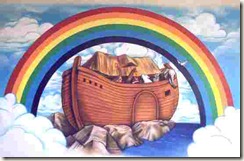
“Do you know how the snail made it to Noah’s ark? ...Through persistence.” - One of my awesome friends, Jarred through Facebook chat

 Noah's Ark


Chelsea Ady

I’ve always known I wanted to be a writer. My parents have as well, as they sat through many impromptu story tellings, usually starting with, “Did you know that …” One of my favorite home movies comes from Christmas on my fifth birthday. Sitting on the fireplace ledge, I had a piece of paper about the size of my little five-year-old palm in my hand. I looked up at the camera and said, “Mommy, did you know that there’s a story written on here?”

I proceeded to tell the story of Jesus, Mary, and “Jofus” (I hadn’t mastered his name yet) in detail from each of their perspectives. When I finished and smiled at the camera, I dropped the paper which, actually, was a piece of packaging I ripped around a sticker of a snowman and definitely too small to hold more than a sentence.

However, now that I’m older and have studied the art of writing, I understand that being an author isn’t about rambling and pretending stories are hidden in snowmen. I understand plot outlining, rising action, falling action, character connect-ability, climax, moral, themes, flaws and dialogue. I know what rules you NEED to bend (in school, we were taught to never use “said”. In authoring, you rarely use anything else!) and which to strictly adhere to. This knowledge, however, does not produce best sellers. And when you, like me, cannot think of a plot, you have nothing.

Recently (like the past year and a half) I’ve slaved and prayed and studied over tips for developing plots. I have a file full of developed characters and developed scenes, but right now they’re on a bus; I don’t know where they’re going or who will end up sitting next to whom. I vented my frustrations on all who would listen and received a lot of “don’t worry about it” sentiments and “just keep developing your scenes and look for a pattern.” But that’s not what I needed; if I ever wanted to become successful, I did need to worry about it and I needed to stop wasting my time perusing fictitious snippets of Arlington National Cemetery, two girls applying make-up, a woman grieving her brother’s death in the first months of our current war, and two detectives who (surprise, surprise) find solace in each other’s company to splice together a Mondo-plot. I needed to let these scenes go on suspended animation and start by thinking of interesting situations. What I needed did not rest with the caring “It’ll all get better” statements, but with one powerfully quiet sentiment IMed through Facebook by a very good friend of mine:

“Do you know how the snail made it to Noah’s ark? ...Through persistence.”

And then … like the final twig snap that unleashes the dam’s flood, I had two plots. TWO! This is monumental because I can finally enjoy the process of writing instead of starting in the middle with a broken compass. I can guarantee I will be much happier in the coming weeks!

And why can’t a novel be as easy as sitting on the fireplace ledge, letting and alternate reality become tangible, real? It’s what I love, so I think it’s possible to find fun in the complex and challenging.

novel writers

Wednesday, December 22, 2010

Concerto for Pen and Paper


Have you ever experienced a moment you wish you could hold onto forever?

I will surmise a “yes”.

You are not alone. Millions of Americans experience something worth cherishing every day. A portion of these individuals successfully capture this moment and successfully freeze time within it.

“How?” you ask.

The right-brained folds are waving their arms, stretching their tendons to share their epiphany. The logical left-brains idly peer at me, an eyebrow crooked saying, “The answer’s in the title.”

That’s right: ART! Art successfully captures a moment and even conveys the picture to others.

Now, there are many forms of art; I will focus on the two I understand best: music and writing.

What do the following have in common with the other?

-Brahms and Bradbury -Schubert and Shakespeare -Defoe and Debussy.

Other than clever alliteration, each of these created at least one widely-recognized composition; the first of each pair created musical compositions and the latter of each created literary compositions. These six individuals fall under the classification of “artist”. The process of creating artwork, or composition, is a fairly straightforward, whether it’s musical or literary. Procedural uniformity does not, however, deter from the task’s complexity.

In musical composition, my level of understanding does not match my familiarity with literary composition. However, applying my basic understanding of the art drew some universal connections to writing that I found rather interesting.

1. A writer begins a piece of work when they receive an idea: a piece of dialogue, a scrap of scenery, or an image of a character. A musician begins a piece of work when they discover a pleasant chord progression or just the right combination with their right hand on a piano.


2. Depending on the character, the dialogue, or the scene, an author quickly realizes the genre to which their piece belongs (e.g. Fantasy, SciFi, FanFic – yes, that counts nowadays – Auto/Biographical, Romance). Likewise, a composer realizes the key signature of a piece as the chord progression continues.


3. The main voice of any piece of writing is the Point of View. A writer must select the narrator early in the writing process. Will the protagonist (main character) narrate in “I” and “me” (first person) or will an unseen narrator tell the events and thoughts of the protagonist (third person limited) and the other characters of the story (third person omniscient)? I won’t add second person to this queue, as it is silly and awkward to format an entire novel with it (referring to oneself as “you”, such as talking to oneself: You hear a noise outside.) POV decision settles the projected voice within the piece. The decision of Time Signature works the same way for music; this fraction-resembling image instructs the beats per measure over which note represents a full beat (e.g. 2/4 means the dividers of music contain two beats each in a time signature that gives the quarter note – hence the “quad/quarter” reference in the number 4 – the prestige of being the beat value.) Confused yet? To be concise, the time signature sets the cadence to the piece, therefore creating its voice and writing structure.


4. Another important aspect of any writing piece is pace. An action-driven pace will have knife fights, car chases, dynamic twists, pounding fists, and drilling-point sentence structure. However, a character-driven pace will take use a relaxed pace to document personal growth and day-to-day uses of objects: knives will cut bread, not people; cars will drive, not chase; there will be few twists, but they won’t be that dramatic until the final turning point; fists will clench in passion, not anger; the sentence structure will flow into long, languid phrases of description and normal dialogue. The pace is crucial to development; an action novel will not diagnose a freelancing spy with cystic fibrosis. Nor will a cancer patient in a personal growth novel engage in a shooting spree out the sliding door of an unmarked van on a mission to kidnap the prime minister. In music, the tempo will set the defining pace: the tempos of Sousa marches center on 120 beats per minute (bpm), not 70. Likewise, “Moonlight Sonata”, a rather pensive composition, carries the tempo marking “Adagio” which falls within the range of mid-sixties to mid-seventies bpm. Finding the right pace ensures the strength of a piece.


5. This bullet point will take far less time and brain power to read. Both forms of composition rely on mood identification to convey … well, mood!


6. This step is usually achieved after the piece is complete and sitting in the happy, tired, and relieved artist’s hands: length. Several titles classify written work by length: short story, novelette, novella, novels. I don’t know if there are any names for compositional lengths in music; if there are, I do not know them. Whereas a series is to multiple, successive literature, movements are to multiple, successive musical pieces. While you may be unable to read every part of a series in one sitting, musical movements continue with only brief interruption: generally not even long enough for audience applause – that is, unless you have an unaware audience member just waiting to feel their hands praise the worthy performers. However, that’s not considered applause; that’s just awkward noise from an embarrassed lone-clapper. But I digress.


7. This last point demonstrates that I am not a linear-thinker. This point is one of the preliminary considerations in a piece of composition: audience. No, I’m not still talking about the Lone-Clapper. “Audience” pertains to those reading a piece of literature. An author must determine if they write to children, teens, adults, or a specified interest, such as military, medical, or scientific. The musical composer must decide the level of proficiency they write for: will the piece be repertoire for a beginning band? High school? College? Professional? What about orchestration? Will it be a piece for a band (instrument that need air to make sound and percussion) or an orchestra (select band and stringed instruments)? Will the composer write for a soloist or a small group such as a duet (2), a trio (3), or a quartet (4) on up? Or will the piece cater to ensembles – small groups of musicians usually containing about one player on each part? Or will the performer not use an instrument at all but, instead, their voice? Will this performer be a soloist or part of a choir? Where is the proficiency? The pairings and questions are not endless, but for the sake of my fingers and your brain, we’ll say they are. The concentration on reader and performer controls word and theme choice in writing and note and rhythm choice in composers; this either expands or constricts a creation’s ability and constructs little barriers in the process of formation.


No matter the form, once the idea forms inside the mind of an artist, it becomes a burning passion to the finish line. Just knowing that you’ve uncovered one corner of a treasure drives the artist into a frenzy to unlock the masterpiece buried in their mind. Until the completion of the piece, and subsequent unleashing upon the world, the artist is unstoppable.

Both the writer and the composer have a story to tell. These two may share the same inspiration and may envision the same story; they just use different means of expression.

While I may describe a lively field of wheat and wildflowers under a blue sky with cotton-ball clouds in descriptive terms, a composition student may choose a flute solo filled with paired legato-staccato eighth notes and trills. Just the same, a canvas artist may choose a painterly style to make the wind whipping through wheat stalks seem tangible and visible, whereas a graphic designer may create a young model with wildflowers for a dress, sunlight and wind for skin, and wheat for hair.

Same inspiration.

Same depiction.

Same procedure.
Yet, the unique touch of an individual’s expression.