For months, musicians practice the same pieces over and over and over until they want to scream and throw the pages off a 30-story balcony, watching the pages flutter serenely down atop taxis and man-hole covers.
And laugh maniacally as the pages turn to dirt-stained rubbish.
Take choir, for instance. Choral musicians learn multiple languages to perform singular pieces. It becomes a mad dash to research exact pronunciations, stresses, and word phrasing of languages the musician will never speak again.
All musicians repeat their failures until they can correct them. Whether this is foreign language learning or note learnings, it is a continuous loop of reiteration into all hours of the night and minutes in the lunchline in public places.
"Atchi no mi zu wa nigai zo. Atchi no mi. Atchi. Ah-tchi. t-chi. t-chi. t-chi. Ah-tchi. Atchi. Atchi!"
For months, musicians beat themselves to near-death extremes (I may exaggerate, but there are many sleepless nights that create the feeling of being "undead") to learn these pieces for a single performance. This performance could last anywhere from 10 minutes to an hour (in a school or small orchestral setting) but they take months to prepare. Months to perfect.
Why? WHY?
I have absolutely no clue. I could get mushy and say "it's an emotional experience, a medium of expression and release", but it's not always that. When I pick up my flute and practice the same three measures consectutively or I grab my piccolo and try to work my high range even higher, the only emotion I feel is anger and determination, which usually results in a headache.
So why do MILLIONS enjoy creating music?
Masochism. Insanity. Obscure Freudian concepts.
For me, music is expression, but it also a challenge that I need to overcome, that I need to master. It's a puzzle to be solved. It's a Rubix cube, it's labyrinth. Music teaches me about myself; about my motivation, my hidden emotions, my potential, and my ability to create something from nothing.
I could explore this topic even further, but, ironically (or perhaps fittingly) I have to leave now for my band concert.
Tuesday, February 15, 2011

Tuesday, January 18, 2011
Ready to Sail
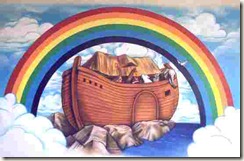
“Do you know how the snail made it to Noah’s ark? ...Through persistence.” - One of my awesome friends, Jarred through Facebook chat

I’ve always known I wanted to be a writer. My parents have as well, as they sat through many impromptu story tellings, usually starting with, “Did you know that …” One of my favorite home movies comes from Christmas on my fifth birthday. Sitting on the fireplace ledge, I had a piece of paper about the size of my little five-year-old palm in my hand. I looked up at the camera and said, “Mommy, did you know that there’s a story written on here?”
I proceeded to tell the story of Jesus, Mary, and “Jofus” (I hadn’t mastered his name yet) in detail from each of their perspectives. When I finished and smiled at the camera, I dropped the paper which, actually, was a piece of packaging I ripped around a sticker of a snowman and definitely too small to hold more than a sentence.
However, now that I’m older and have studied the art of writing, I understand that being an author isn’t about rambling and pretending stories are hidden in snowmen. I understand plot outlining, rising action, falling action, character connect-ability, climax, moral, themes, flaws and dialogue. I know what rules you NEED to bend (in school, we were taught to never use “said”. In authoring, you rarely use anything else!) and which to strictly adhere to. This knowledge, however, does not produce best sellers. And when you, like me, cannot think of a plot, you have nothing.
Recently (like the past year and a half) I’ve slaved and prayed and studied over tips for developing plots. I have a file full of developed characters and developed scenes, but right now they’re on a bus; I don’t know where they’re going or who will end up sitting next to whom. I vented my frustrations on all who would listen and received a lot of “don’t worry about it” sentiments and “just keep developing your scenes and look for a pattern.” But that’s not what I needed; if I ever wanted to become successful, I did need to worry about it and I needed to stop wasting my time perusing fictitious snippets of Arlington National Cemetery, two girls applying make-up, a woman grieving her brother’s death in the first months of our current war, and two detectives who (surprise, surprise) find solace in each other’s company to splice together a Mondo-plot. I needed to let these scenes go on suspended animation and start by thinking of interesting situations. What I needed did not rest with the caring “It’ll all get better” statements, but with one powerfully quiet sentiment IMed through Facebook by a very good friend of mine:
“Do you know how the snail made it to Noah’s ark? ...Through persistence.”
And then … like the final twig snap that unleashes the dam’s flood, I had two plots. TWO! This is monumental because I can finally enjoy the process of writing instead of starting in the middle with a broken compass. I can guarantee I will be much happier in the coming weeks!
And why can’t a novel be as easy as sitting on the fireplace ledge, letting and alternate reality become tangible, real? It’s what I love, so I think it’s possible to find fun in the complex and challenging.

Wednesday, December 22, 2010
Concerto for Pen and Paper
Have you ever experienced a moment you wish you could hold onto forever?
I will surmise a “yes”.
You are not alone. Millions of Americans experience something worth cherishing every day. A portion of these individuals successfully capture this moment and successfully freeze time within it.
“How?” you ask.
The right-brained folds are waving their arms, stretching their tendons to share their epiphany. The logical left-brains idly peer at me, an eyebrow crooked saying, “The answer’s in the title.”
That’s right: ART! Art successfully captures a moment and even conveys the picture to others.
Now, there are many forms of art; I will focus on the two I understand best: music and writing.
What do the following have in common with the other?
-Brahms and Bradbury
-Schubert and Shakespeare
-Defoe and Debussy.
Other than clever alliteration, each of these created at least one widely-recognized composition; the first of each pair created musical compositions and the latter of each created literary compositions. These six individuals fall under the classification of “artist”. The process of creating artwork, or composition, is a fairly straightforward, whether it’s musical or literary. Procedural uniformity does not, however, deter from the task’s complexity.
In musical composition, my level of understanding does not match my familiarity with literary composition. However, applying my basic understanding of the art drew some universal connections to writing that I found rather interesting.
1. A writer begins a piece of work when they receive an idea: a piece of dialogue, a scrap of scenery, or an image of a character. A musician begins a piece of work when they discover a pleasant chord progression or just the right combination with their right hand on a piano.
2. Depending on the character, the dialogue, or the scene, an author quickly realizes the genre to which their piece belongs (e.g. Fantasy, SciFi, FanFic – yes, that counts nowadays – Auto/Biographical, Romance). Likewise, a composer realizes the key signature of a piece as the chord progression continues.
3. The main voice of any piece of writing is the Point of View. A writer must select the narrator early in the writing process. Will the protagonist (main character) narrate in “I” and “me” (first person) or will an unseen narrator tell the events and thoughts of the protagonist (third person limited) and the other characters of the story (third person omniscient)? I won’t add second person to this queue, as it is silly and awkward to format an entire novel with it (referring to oneself as “you”, such as talking to oneself: You hear a noise outside.) POV decision settles the projected voice within the piece. The decision of Time Signature works the same way for music; this fraction-resembling image instructs the beats per measure over which note represents a full beat (e.g. 2/4 means the dividers of music contain two beats each in a time signature that gives the quarter note – hence the “quad/quarter” reference in the number 4 – the prestige of being the beat value.) Confused yet? To be concise, the time signature sets the cadence to the piece, therefore creating its voice and writing structure.
4. Another important aspect of any writing piece is pace. An action-driven pace will have knife fights, car chases, dynamic twists, pounding fists, and drilling-point sentence structure. However, a character-driven pace will take use a relaxed pace to document personal growth and day-to-day uses of objects: knives will cut bread, not people; cars will drive, not chase; there will be few twists, but they won’t be that dramatic until the final turning point; fists will clench in passion, not anger; the sentence structure will flow into long, languid phrases of description and normal dialogue. The pace is crucial to development; an action novel will not diagnose a freelancing spy with cystic fibrosis. Nor will a cancer patient in a personal growth novel engage in a shooting spree out the sliding door of an unmarked van on a mission to kidnap the prime minister. In music, the tempo will set the defining pace: the tempos of Sousa marches center on 120 beats per minute (bpm), not 70. Likewise, “Moonlight Sonata”, a rather pensive composition, carries the tempo marking “Adagio” which falls within the range of mid-sixties to mid-seventies bpm. Finding the right pace ensures the strength of a piece.
5. This bullet point will take far less time and brain power to read. Both forms of composition rely on mood identification to convey … well, mood!
6. This step is usually achieved after the piece is complete and sitting in the happy, tired, and relieved artist’s hands: length. Several titles classify written work by length: short story, novelette, novella, novels. I don’t know if there are any names for compositional lengths in music; if there are, I do not know them. Whereas a series is to multiple, successive literature, movements are to multiple, successive musical pieces. While you may be unable to read every part of a series in one sitting, musical movements continue with only brief interruption: generally not even long enough for audience applause – that is, unless you have an unaware audience member just waiting to feel their hands praise the worthy performers. However, that’s not considered applause; that’s just awkward noise from an embarrassed lone-clapper. But I digress.
7. This last point demonstrates that I am not a linear-thinker. This point is one of the preliminary considerations in a piece of composition: audience. No, I’m not still talking about the Lone-Clapper. “Audience” pertains to those reading a piece of literature. An author must determine if they write to children, teens, adults, or a specified interest, such as military, medical, or scientific. The musical composer must decide the level of proficiency they write for: will the piece be repertoire for a beginning band? High school? College? Professional? What about orchestration? Will it be a piece for a band (instrument that need air to make sound and percussion) or an orchestra (select band and stringed instruments)? Will the composer write for a soloist or a small group such as a duet (2), a trio (3), or a quartet (4) on up? Or will the piece cater to ensembles – small groups of musicians usually containing about one player on each part? Or will the performer not use an instrument at all but, instead, their voice? Will this performer be a soloist or part of a choir? Where is the proficiency? The pairings and questions are not endless, but for the sake of my fingers and your brain, we’ll say they are. The concentration on reader and performer controls word and theme choice in writing and note and rhythm choice in composers; this either expands or constricts a creation’s ability and constructs little barriers in the process of formation.
No matter the form, once the idea forms inside the mind of an artist, it becomes a burning passion to the finish line. Just knowing that you’ve uncovered one corner of a treasure drives the artist into a frenzy to unlock the masterpiece buried in their mind. Until the completion of the piece, and subsequent unleashing upon the world, the artist is unstoppable.
Both the writer and the composer have a story to tell. These two may share the same inspiration and may envision the same story; they just use different means of expression.
While I may describe a lively field of wheat and wildflowers under a blue sky with cotton-ball clouds in descriptive terms, a composition student may choose a flute solo filled with paired legato-staccato eighth notes and trills. Just the same, a canvas artist may choose a painterly style to make the wind whipping through wheat stalks seem tangible and visible, whereas a graphic designer may create a young model with wildflowers for a dress, sunlight and wind for skin, and wheat for hair.
Same inspiration.
Same depiction.
Same procedure.
Yet, the unique touch of an individual’s expression.
Thursday, November 25, 2010
Facebook Fraud: You're Not Talking to Your Friend
Just now, I experienced a Twilight Zone moment:
I received a Facebook message from myself ... that I didn't write.
Evidently, a friend of mine figured out how to impersonate people on Facebook -- and it's a lot easier than you would think.
I will use no names.
Do not attempt what I am explaining - it is illegal and immoral.
I will now do what I criticize the News for: explaining exactly to commit a fraud in order to advise the public.
First, he went to "Facebook Settings" and changed his name to my name.
Then, he went to my page and stole my profile picture, making it his own.
From there, he was able to communicate with anyone, including myself, using my name.
He assured me he did not communicate with anyone besides me, and that he did it just so I would be aware that it's simple and anyone can do it. However, he contacted me through several of my friends and - very convincingly, might I add - started a conversation with me before disclosing his true identity again.
Evidently, it's called "Masquerading".
This worries me. This is TOO easy; anyone can do this!
I trust that you, a law-abiding, moral citizen, will not use this information for more than it was offered.

Thursday, November 11, 2010
Happy Veterans Day - Awesome Videos


On this eleventh day, in the eleventh month, I wish to thank all military members and family, past, present, and future. I do not think you hear enough thanks, however I also believe no amount of "thank you"s are enough.
In lieu of words, I leave you with two videos that state more than I could in such small space. Enjoy!
Pray with me for more of these glorious returns.
Happy Veterans Day all!

Saturday, November 6, 2010
Inspiration From Guilty Pleasure
Born from succumbing to my current guilty-pleasure, an interesting notion began to take shape.
Long ago, the accomplice to all my future crimes, (my best friend from preschool, who truly knows too much to be on the outside) Linnea, introduced me to arguably the best piece of cinematography ever filmed: Dr. Horrible's Sing-Along Blog. Linnea knew of my ... slight obsession ... with Broadway sensation/infallible actor, Neil Patrick Harris, and sat me down for a viewing that would prove to be life-changing.

After watching this unequivocally entertaining musical tragicomedy ... eh, 17? times ... I realized, "ya know, NPH isn't the only brilliant actor here. Captain Hammer's actor is truly impressive." Therefore, I went on a search for the man the credits called "Nathan Fillion". Turns out, this gifted man stars on ABC's hit Crime Drama "Castle" about a writer -Richard Castle - who's friendship with the mayor grants him the privilege of tagging along with the local cops for inspiration.
And inspiration he finds.
Generally, I despise Ghostwriters - authors paid to secretly write on another's behalf under the latter's name and credence - but I find writers publishing books on behalf of fictional characters oddly charming. Currently, the general public can pick up a copy written by "Richard Castle" of either Heat Wave or Naked Heat, novels the namesake character writes throughout the series "Castle".
Now onto my "great notion born of guilty pleasure": I read "teaser chapters" posted in intervals on ABC's page for the show. I fully realize this book's aim is to hook avid fans for a profit, but I will happily buy into it. Anyway, amidst my reading, I noticed an add for "Shakespeare: The Manga Edition" created by the ever-popular book-summation website, Cliffnotes.
Mr. Opportunity began his knocking.

It is somewhat common knowledge that I aspire to become a novelist. To those who did not know this, I doubt it comes as much surprise. Amidst straining my mind for the ideal market (one cannot expect just to write and receive lump sums for their work, obviously) I thought about the authors who exploited their readers, enticing them for the sale of a copy, and I resigned that it was not my nature to ever use my gift of writing in such a way. One can always find a lucrative career in writing a self-help book incorporating rewordings of common phrases, beautifully scripted text, serene background images of autumn leaves on a winding pathway and white-sanded beaches, and phrases geared around gooey "self-love" and Biblical passages charged with motivation and self-analysis. People clamor for this genre like it's the gourmet of the book-rack. I, of course, would never stoop to exploitation to avoid my horrifying future in public education.
However, could there be a market niche that does not exploit the readers, but still fills a unknown need? For instance, this book reworking Shakespeare for students who do not aim to quote Hamlet's desperation verbatim. (To be, or not to be. That is the question! Whether 'tis nobler in the mind to suffer, than to -- okay. So I'm not the audience I'm addressing. Point made.) They still receive the meat of Shakespeare's brilliance without slaving page-by-page overhis novel Sparknotes. Same with the books created from television shows, such as the two aforementioned novels, The Bro-Code for How I Met Your Mother and the multitudes of X-File novels that turn old shows from the series, and even the two movies, into paperbacks. These do not exploit, even though the readers never realized how desperately they wanted to read through Barney Stinsons' manual of how to be a player until they saw his innocent little face with the "eye contact" fingers on the cover at Target. (I flipped through, but I didn't buy it.)
Perhaps there is a place for me within this niche, with the proper legalities and moral standards in check. It's something to look into.
However, until some more neon signs angle their arrows toward this field, I am content with my fiction, even if my only fan remains my mother.


Long ago, the accomplice to all my future crimes, (my best friend from preschool, who truly knows too much to be on the outside) Linnea, introduced me to arguably the best piece of cinematography ever filmed: Dr. Horrible's Sing-Along Blog. Linnea knew of my ... slight obsession ... with Broadway sensation/infallible actor, Neil Patrick Harris, and sat me down for a viewing that would prove to be life-changing.

After watching this unequivocally entertaining musical tragicomedy ... eh, 17? times ... I realized, "ya know, NPH isn't the only brilliant actor here. Captain Hammer's actor is truly impressive." Therefore, I went on a search for the man the credits called "Nathan Fillion". Turns out, this gifted man stars on ABC's hit Crime Drama "Castle" about a writer -Richard Castle - who's friendship with the mayor grants him the privilege of tagging along with the local cops for inspiration.
And inspiration he finds.
Generally, I despise Ghostwriters - authors paid to secretly write on another's behalf under the latter's name and credence - but I find writers publishing books on behalf of fictional characters oddly charming. Currently, the general public can pick up a copy written by "Richard Castle" of either Heat Wave or Naked Heat, novels the namesake character writes throughout the series "Castle".
Now onto my "great notion born of guilty pleasure": I read "teaser chapters" posted in intervals on ABC's page for the show. I fully realize this book's aim is to hook avid fans for a profit, but I will happily buy into it. Anyway, amidst my reading, I noticed an add for "Shakespeare: The Manga Edition" created by the ever-popular book-summation website, Cliffnotes.
Mr. Opportunity began his knocking.

It is somewhat common knowledge that I aspire to become a novelist. To those who did not know this, I doubt it comes as much surprise. Amidst straining my mind for the ideal market (one cannot expect just to write and receive lump sums for their work, obviously) I thought about the authors who exploited their readers, enticing them for the sale of a copy, and I resigned that it was not my nature to ever use my gift of writing in such a way. One can always find a lucrative career in writing a self-help book incorporating rewordings of common phrases, beautifully scripted text, serene background images of autumn leaves on a winding pathway and white-sanded beaches, and phrases geared around gooey "self-love" and Biblical passages charged with motivation and self-analysis. People clamor for this genre like it's the gourmet of the book-rack. I, of course, would never stoop to exploitation to avoid my horrifying future in public education.
However, could there be a market niche that does not exploit the readers, but still fills a unknown need? For instance, this book reworking Shakespeare for students who do not aim to quote Hamlet's desperation verbatim. (To be, or not to be. That is the question! Whether 'tis nobler in the mind to suffer, than to -- okay. So I'm not the audience I'm addressing. Point made.) They still receive the meat of Shakespeare's brilliance without slaving page-by-page over
Perhaps there is a place for me within this niche, with the proper legalities and moral standards in check. It's something to look into.
However, until some more neon signs angle their arrows toward this field, I am content with my fiction, even if my only fan remains my mother.


Friday, November 5, 2010
The Approaching Season
 Snowflakes began to pirouette from the drained grey sky about the time I arrived home from school. Now, an hour and a half later, intermittent spits of fluffy white drift silently to the ground. It is time to bring in the pumpkins and haul out the Nativity Set; time to swap spiced apple cider for hot chocolate billowing warmly-scented steam; time to replace the Halloween candy with puffy, homemade sugar cookies. I’m ready for winter.
The appeal of “lamb’s wool scarves”, clingy sweaters, fluffy earmuffs, and thick trench-coats, cannot be denied; I feel warm ‘n’ toasty just thinking on it! Oh, and the beautiful serenity of pure white as far as the eye perceives, crimson cardinals upon a snowy branch, lopsided snow-people in front yards, and the never-ending screams of my neighbors sledding down a slope of about 3 degrees. That is winter: fun, love, innocent beauty, and desperately seeking warmth. No other season holds the same captivating power as the season of snow.
Go ahead and bring this up to me when I am bent over the hood of my mini-SUV, desperately reaching for that spot in the middle I cannot reach from either side, while snow from the roof of my car and the carpet of Heaven showers my head, and my fingers turn purple. Go ahead and remind me how much I love winter and you just might experience my boxing abilities.
In all seriousness, I love winter enough to overlook its downfalls – enough that I generally laugh off the marrow-freezing cold and soggy socks.
Best reason for loving winter? CHRISTMAS!!
So the obvious reason for loving Christmas is thinking about how the Supreme Deity decided to take on this crappy flesh and walk around a bit. But one must also remember the adorable faces on babies atop Santa’s knees, wearing Santa hats to the grocery store, and trying to figure out what to buy a man for a present. (Seriously men – you’re impossible!) Yes, to coin an old phrase, “It’s the most wonderful time of the year!” – at least, until next season.
Because this is the first snowfall, it all melted before reaching the ground, let alone building up. Therefore, I have a bit more time to overly-romanticize the coming snowfall before I have to walk across campus in it.
Subscribe to:
Posts (Atom)